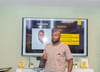
Adrian sits down with Carlton Cofie, Editor of Asaase Radio 99.5 in today’s episode. In this captivating interview, Carlton recounts his journey from teaching broadcast journalism to shaping the next generation of reporters in Ghana.
From discussing the impact of storytelling and the challenges of the evolving news industry to reminiscing about his time in London, this episode is packed with wisdom and insights.
We uncover:
- The profound impact of storytelling and interviews in shaping public perception and impacting lives in Ghana and the diaspora
- The challenges faced by traditional media outlets and the need to adapt to the digital platform
- The gap between industry practices and academia in journalism education and the importance of proper training for aspiring journalists
- What the future of journalism in Ghana looks like, including the convergence of traditional and digital media and the necessity for journalists to be versatile in reporting across multiple platforms
- Memorable moments from Carlton's career, including interactions with budding musicians and interviewing Dr. Joe Cohen, the inventor of a Malaria vaccine
Today's Episode Website:
https://thesoundofaccra.com/asradio
Season 6 Sponsors: Workspace Global (connects you to remote creative teams that offer a variety of design, digital and development services to help you build and grow your brand.)
$50 off coupon for first 5 listeners
SOATOPLISTENER_1
SOATOPLISTENER_2
SOATOPLISTENER_3
SOATOPLISTENER_4
SOATOPLISTENER_5
Our Partners and Free resources
Start a profitable business with Skool: https://thesoundofaccra.com/skool
Rent anything in the UK: https://fatllama.com/r/adri-6451b
Free Podcast course: https://skl.sh/2TRY0fN
Start or uplevel a podcast: https://www.atozpodcasting.com
Fresh Bread, Catering and Food Processing in Accra: https://ebatfoods.com/
Ghana's First Super App: https://shaqexpress.com/
Connect with Carlton Cofie
Email: carltoncofie@gmail.com
Facebook: Carlton Cofie
Topics (Timestamps):
00:00 Intro
04:07 Feeling trapped in academia, industry's broadcasting challenges
07:07 Teaching and guiding colleagues in newsroom skills
12:12 Praising skills, discussing media trends, and future
13:32 People want on-demand content and news
16:27 Traditional media can thrive alongside digital media
19:59 Media arts school prepared for online and broadcast
25:31 Exciting career capturing rising stars' journeys
27:20 Broadcasters should be humble and honest
31:57 Presenter debates economist to entertain and inform
34:20 Journalism is about public service, not self-promotion
37:50 Mister Cartoon Cofie, journalist and radio editor
38:50 Outro
Watch this episode on YouTube: https://youtu.be/fmwDkxR7vio
Watch season 6 episode 1 with Twi Learning Center: https://youtu.be/6kuFxHScmLk?si=RjHXBeaT1eQHFzKV
Catch up with Season 5 here: https://www.youtube.com/watch?v=NnqpgGxTAXg&list=PLJUVirAfWnNoGiJNHHWm6aYTUUberuD5V
Listen to the podcast on other platforms
https://linktr.ee/thesoundofaccrapod
Social Media
YouTube: https://youtube.com/thesoundofaccrapodcast
Website: https://thesoundofaccra.com
Instagram: https://www.instagram.com/thesoundofaccra/
TikTok: https://www.tiktok.com/@thesoundofaccra
Twitter: https://twitter.com/thesoundofaccra
Facebook: https://web.facebook.com/thesoundofaccra
Linkedin: https://gh.linkedin.com/company/the-sound-of-accra
Support the show
https://www.paypal.me/gofundad
Get in Touch
Website: https://www.thesoundofaccra.com
Contact: https://thesoundofaccra.com/contact
Email: info[at]thesoundofaccra.com
About The Sound of Accra Podcast
Our mission is always the same, to promote Global Ghanaian excellence. And always to bring you closer to Accra, whenever you are, with powerful stories that make you want to take action in your career, business or personal life.
For almost 5 years, we have been championing global Ghanaian founders, entrepreneurship and Creators through podcasting. We've achieved 10s of thousands of audio downloads worldwide and published well over 150 episodes to date.
It's our mission to grow and establish global audience, and become a go-to resource for learning about native and diasporan Ghanaian Creators, Entrepreneurs and Founders worldwide.
I'm kindly asking for your help. Yes, all of you. To leave a review on Apple Podcasts and Spotify, the most popular podcast platforms that you all listen to us on
Mentioned in this episode:
Try WorkSpace Global Today
Workspace Global are the official sponsors of Season 6 of The Sound of Accra Podcast. Workspace Global connects you to remote creative teams that offer a variety of design, digital and development services to help you build and grow your brand.
00:00:00
Sorry about that. Hey, everyone. I got
00:00:04
my name, Adrian Daniels. Welcome to the Sound of Accra Podcast. This is your
00:00:07
first time listening. This is a show where we speak with top Ghanaian founders,
00:00:11
entrepreneurs, and creators worldwide with the aim of leaving behind a meaningful takeaways
00:00:15
that you can apply to your life, business, and career. For today's,
00:00:19
episode show notes, I'd like you to head over to thesoundofaccra/asradio.
00:00:24
That's the sound of accra.com forward slash asradio. That's a
00:00:28
s r a d I o. Alright? If you're watching on
00:00:32
YouTube, please subscribe. Get in the comments below. Let us know what you think of
00:00:35
this episode. Hit the like button. If you're listening on the podcast place
00:00:39
such as Apple Podcasts and Spotify, a 5 star review is very much
00:00:42
appreciated. Alright. So for today's,
00:00:46
episode, I would like to introduce, mister Carlton Cofie onto
00:00:50
the show. He is the editor of Asaase Radio
00:00:54
99.5 here in Accra, Ghana, the voice of our lands.
00:00:58
They have many other stations across across the nations,
00:01:01
and, we are in the Cantonment Accra, branch
00:01:05
where they broadcast to Accra. Mister Carton Cofie, thanks for having thanks
00:01:09
for having me in the show. Thank you for coming along. Thank you very much.
00:01:11
I appreciate your time too. Yeah. Thank you so much. So just just to
00:01:15
go straight into the interview, could you just tell us a little bit about your
00:01:18
background as a editor? As as I I believe you've just, you're
00:01:21
you're fairly new here? Yeah. I'm fairly new here. And,
00:01:25
what I do here, I'm the the head of news, the news editor.
00:01:29
So I have about, maybe, about 10 or so more,
00:01:33
yeah, reporters who are under me. And, generally, what we
00:01:37
do is a traditional news real style. So we come, then
00:01:41
we have a news meeting. We look at the issues that are trending Uh-huh.
00:01:44
And those that we wanna have a take on. Then we,
00:01:48
we assign reporters to go. And sometimes they are not
00:01:52
very successful, but most times they are successful. So when the news come,
00:01:56
what, happens is that they write their stories, and then we have with
00:02:00
the system is networked. So I can edit their stories in the
00:02:03
raw folder, then put it in the the edited folder. So from the edited
00:02:07
folder, we, compile what's to be read for news.
00:02:11
Okay. That that's what, I mean, happens on a daily basis. Okay.
00:02:15
So you you take care of the traditional kind of media
00:02:18
as in, like, the like the Broadcast radio. Broadcast radio. Okay. Great.
00:02:22
It's not necessarily the the actual shows. Is it actual shows, or
00:02:26
is it like the the the the media that's read read online?
00:02:30
What's read on the, the news aspect. But then I'm still in charge of
00:02:34
the the digital and the online. Okay. But then the
00:02:37
the the old arrangement still persists, so I have to wait a bit so
00:02:41
the demarcation comes and they come right under me. But what they have now is
00:02:45
that there's a head of digital who handles the
00:02:48
online and the, the digital aspect. But then,
00:02:51
we've seen that it'd be nice to have the head of news
00:02:55
in charge of all, and, we want them to be part of the news because
00:02:59
there are many angles that we take to a story. Mhmm. It'll be good if
00:03:03
they have an insight right from the beginning. They can tell us
00:03:07
where they can take it from. Yeah. Instead of waiting for us to brief them.
00:03:11
Absolutely. That's that's my idea. Well, my background
00:03:14
is broadcasting from I was at the Ghana Broadcasting Corporation.
00:03:18
Wow. That's a state broadcaster. Mhmm. So from I was there from the Ghana
00:03:22
Institute of Journalism where I I did my intern internship. Mhmm. And
00:03:26
then did my service, and I worked there for a few years before I went
00:03:29
to England Mhmm. And then studied and came back. Okay. So on return
00:03:33
to Ghana, while I ventured into teaching, so I was in academia
00:03:37
for 10 years. I was teaching broadcast, journalism,
00:03:41
investigative reporting, most of the things associated with journalism
00:03:45
and, yeah, news production. Well, I I I was
00:03:49
teaching all. Wow. But then I'm no longer in academia.
00:03:53
I've decided to come back to industry to have the fee because I was missing
00:03:56
the industry so badly. I can imagine. Yeah. Yeah. Did you feel like you're out
00:03:59
of touch, mister Carter, when you, you know, went into teaching
00:04:03
and you couldn't physically get involved in podcast journalism
00:04:07
itself? Oh, yes. I I felt so trapped in a world that I
00:04:10
wasn't too happy with. You know? Yeah. Because the thing about academia,
00:04:15
well, everything is what somebody else has done or said and then
00:04:18
you're well, repeating them or researching them and the like. And
00:04:22
then I I found also that there's a huge gap still in
00:04:26
the industry where most people are
00:04:30
practicing mainly because they find it easy to get into
00:04:33
broadcasting. The problem we had in Ghana is, most
00:04:37
people get the frequencies. Then now they decide what they want to do with it.
00:04:40
Sometimes they find that it's too expensive to hire professionals. So what they do, well,
00:04:44
it's for friends and families get into broadcasting. And and the
00:04:48
the sadness of that is some, only get to know
00:04:52
the basics of broadcasting when it's a bit too late. They because they've gone out
00:04:55
there and done so many unprofessional things. And I was having that
00:04:59
problem also in academia Wow. Where you want to teach them some
00:05:03
basics about journalism or broadcasting. And they have
00:05:06
been watching some of the wrong things and trying to
00:05:10
develop their career on most of the wrong principles. Industry
00:05:22
Yeah. And then do the right thing. Let them see what is done. So at
00:05:26
least when you're pointing someone to something, well, there's there's evidence.
00:05:30
Absolutely. So I I love being back in in the industry. I can imagine.
00:05:34
Yeah. And and you mentioned you went to England to study, the the craft your
00:05:37
craft. Was it university you went to? Yes. I was
00:05:41
at Westminster University, Harrow Campus. Good old London. Yeah. Yeah. Yeah.
00:05:45
Yeah. Big time. And I love Harrow. I miss Harrow big time.
00:05:48
Yeah. Yes. I remember the days I used to go. Because I was living in
00:05:51
Watford at the time. Okay. I know Watford. Yeah. Yeah. So I used to go
00:05:54
with the bus 258, go to Harrow on the Hill, bus station. So I
00:05:58
could walk all the way to the campus near Northwick Park.
00:06:01
Yeah. And, yeah. Northwick Park Hospital. Yeah. Yes. Yes. I miss the experience. And
00:06:05
and one thing I miss also, there's this donut kebab.
00:06:09
I didn't expect that. There's kebab land near the Harrow bus
00:06:12
station, and I love the the Donut kebab so much. It's one
00:06:16
thing I miss about Harrow. You know? My dad's a fan of kebabra as
00:06:20
well. I totally totally understand. And, when you when you picked
00:06:23
up, when you studied broadcast journalism in the UK
00:06:28
and you came here, did you feel like, you know, you you picked up something
00:06:31
that you could contribute to the industry here? You know, because you have a lot
00:06:34
of, you know, Ghanaians, diasporans, whatever, you you know, going aboard and then,
00:06:38
you know, building up their skill sets and then coming back to the country to
00:06:41
make a contribution. Do you feel like, you know, getting acquiring some skills
00:06:45
and knowledge in the west and bringing it here has helped you? Well, I did.
00:06:48
I did. You know, the approach to work and the,
00:06:52
the way you see things Yeah. I think a lot of that. And,
00:06:56
you know, because over here, well, we are an English colony.
00:07:00
But I suppose there's still a lot we're learning from the English, so it's
00:07:04
good to go there, experience them yourself, and then you come. Yeah. And,
00:07:08
well, you could say, for example, some of the people go on
00:07:12
air to read and, well, they would they tend to mispronounce
00:07:16
some of the words and all that. But, well, with your exposure and all these,
00:07:19
you could well well, I led them to what they are doing right, what they
00:07:23
are doing wrong. And, it's great to be a living example
00:07:27
to people. In the newsroom here where I am Mhmm. I teach
00:07:31
well, I in addition to editing their work, I still
00:07:34
teach them, well, how to go about maybe reporting,
00:07:38
structuring their stories, and doing interviews
00:07:42
and reading. And so I think I brought a
00:07:46
lot and, yeah, I've imparted a lot of that in the
00:07:49
classroom, and I'm now doing it in the in the industry. That's that's
00:07:53
brilliant. How does that make you feel? Does you need to make that kind of
00:07:56
impact, you know, on on your home home soil? It makes me feel
00:07:59
so precious, you know, because, you know, every
00:08:03
day after I've come here and done about 8 hours or so on that,
00:08:06
yes, I still go home. And the the news for the following day comes to
00:08:10
me in the evening, And I have to edit that and let them have it
00:08:13
for the morning to read. So, yes, I I think I'm making a
00:08:17
great impact, and they're also appreciating me.
00:08:21
And, it's a great feeling. It's a quick turnaround industry, isn't it? It's
00:08:24
like the maybe the newspapers. I mean, you were in the UK. You know? You
00:08:27
did the Metros, the Daily Mills, in The Sun, you know, whatever is. I
00:08:31
mean, quick quick turnover quick turnover quick turnover. Absolutely. That's journalism for you. You have
00:08:34
to quit quickly turning over and getting it out to the masses.
00:08:38
I wanna come back to journalism, but I wanna kind of venture on and talk
00:08:41
a little bit about Assasi Radio. You know, I I know Assasi
00:08:45
means, you know, land and tree. Yeah. Could you give maybe a very
00:08:49
short brief history about the radio station? It's quite new. Yeah. The
00:08:53
station is fairly new. It's been in existence for barely 4 years.
00:08:57
But then, yeah, as you said, the name Assasi,
00:09:01
refers means the land. Yeah. So, well, our slogan is the voice of our
00:09:05
land. Mhmm. And, the good thing about Assisi Radio, although
00:09:08
it's quite new, the people behind the station are
00:09:12
veterans. Some work in the BBC. Yes. I mean, a few of the
00:09:16
top top guys worked in the BBC for decades. Wow. And,
00:09:20
they came to set up the place. That's amazing. They're always watching over what we
00:09:23
are doing. And, and then the other thing I want
00:09:26
to, mention is that most of the old broadcasters
00:09:31
Ghana had, they started from the national broadcaster, GBC.
00:09:34
And, even in GBC, you find that some of these old
00:09:38
broadcasters are not as celebrated as they are here.
00:09:41
When you come to Assasi, nearly every part of,
00:09:45
Assasin is named after a veteran broadcaster of Ghana. So I
00:09:49
come in the first day I came for an interview, I saw one of my
00:09:52
top top trainers, Cyril Akolache. His name was there and his picture
00:09:56
was there. He was interviewing the president of Burkina Faso. Wow. And I I
00:10:00
mean, I had goosebumps all over me. Because that that was one man who taught
00:10:03
me interviewing, and I loved him so much. And although he's passed on,
00:10:07
I mean, coming here every day and seeing that picture, I mean,
00:10:11
inspires me to do better. And I feel like he's listening to me or
00:10:14
watching me, and, I mean, it's it's great. You go to most of the
00:10:18
cities and you see one is named about, named after,
00:10:22
Elizabeth Ohene, a veteran broadcaster from Ghana who was at the BBC. Yeah.
00:10:25
So this is the one that died? Like No. No. She's alive. Oh, she's alive.
00:10:28
So And the Komnadu Ma was the one who died. Yeah. That one Yeah. One
00:10:31
of the the offices is named after Komnadu Ma. It's like painted in Exactly.
00:10:35
It's beautiful. And then one is named, one of the studios is named after Kukuseji
00:10:39
Ado. He used to report for BBC, one of our top, top, top broadcasters.
00:10:43
So, I mean, when you're here, you get that feeling of
00:10:46
being among very elite broadcasters. Because, you know,
00:10:50
someday, you'll be celebrated as well. Of course. Yeah. Yeah.
00:10:54
And is is that kind of what you're kinda aspiring to, to kind of, like,
00:10:57
leave a legacy and be up there in the hall of fame with some of
00:11:00
these legendary judge analysts? Absolutely. Because over
00:11:04
the last 10 years that I've been teaching Yeah. I suppose I've taught
00:11:08
close to 5 or 6 or 7000 journalists in Ghana. And,
00:11:12
you know, when I first came to Assasi, one of the things that shocked me
00:11:15
were 2 or 3 people who said, oh, sir, you taught me. Sir, you taught
00:11:18
me. You have no idea the gratification you get Mhmm. When you
00:11:22
go to a place and people remember you, I mean, for having taught
00:11:26
them. And, it's not just here. I go to place like, the
00:11:29
DVLA and then there's a student that needing to wanting to, assist
00:11:33
me. So it's all over them. The last time I was somewhere
00:11:37
walking by the road and then someone hailed me from a taxi, someone
00:11:41
called out and mentioned, Carlton. And I looked into I didn't even
00:11:44
recognize her. And she said, oh, you taught me way back in GIJ,
00:11:48
and I felt such a celebrity. You know? So that's that's the
00:11:52
good thing that I've made an impact, and there's still people around who are
00:11:56
learning from me. And, sometimes you imagine what what they would
00:11:59
say if there was my obituary on the wall, and I wonder what they'd
00:12:03
say, really. So I I feel I've made an impact and still making an
00:12:07
impact, and I hope I'm around a little longer before Absolutely. Well, someday.
00:12:11
Yeah. Amazing. I'm sure you will, and you've done a great job. It sounds like
00:12:15
you've been passing on your skills and allowing the the up and coming ones to
00:12:18
kind of hone their skill sets and, you know, make a big contribution to the
00:12:21
country and beyond. This is an interesting place we are in the
00:12:25
world of, like, radio, media, journalism. You You know, you're now starting to
00:12:29
see maybe radio phase out a little bit more and more kinda like podcasting and
00:12:32
digital, you know, YouTube and stuff. What's your kind of, like, thoughts
00:12:36
on on that? You know? Because Assarsee Radio, 2020, 2020,
00:12:40
arguably a pandemic baby. Right? You know, 2020,
00:12:44
you you would think 2020 radio will be dead, but it's still going, especially
00:12:48
in the country like Ghana. I think, you know, all kind of more traditional media
00:12:52
still prominent like Facebook because of, you know, the way the country
00:12:55
is. I mean, what's what's your thoughts on the state of journalism and media right
00:12:58
now? Well, I I I find that although we're doing well
00:13:02
in broadcasting, we have to admit that the future is more
00:13:05
digital. Yeah. It's more online. So the idea is
00:13:09
that when news break and the like, sometimes, you know, it takes a
00:13:13
while to produce a news report and all
00:13:17
that. So sometimes you're way quicker and the online department is there. So
00:13:20
sometimes they lead. If there's a story that we we sometimes they break
00:13:24
the story, and then we come around and get, the other
00:13:28
elements of it. So I think that's what we everybody needs to
00:13:32
embrace. And, because people are no longer
00:13:36
having the luxury of tuning into stations and waiting for particular
00:13:39
shows to air before the hearing. They they want to be able
00:13:43
to maybe have some of these, stuff that you can
00:13:47
play back again and again and again and learn more instead
00:13:50
of maybe missing the opportunity just because you didn't tune in early
00:13:54
or somebody spoke too fast or your radio set suffered some interference
00:13:58
or the like. So I think it's great that we
00:14:02
accept the the, what the future is offering us, that
00:14:05
digital is the way. And, we have the news faster,
00:14:09
quicker, and wherever you want it. Anytime you want it, you have your news
00:14:13
rather than wait for I know. It's now it's on demand. It's
00:14:16
Netflix. It's BBC iPlay. It's for on demand. It's whatever. Right? On
00:14:20
demand. We don't have to wait for the program to come on.
00:14:24
But the beautiful thing is alongside on demand programming, I mean, radio,
00:14:28
TV, traditional TV is still in business. GTV is still there. Metro is still there.
00:14:32
TV Free is still there. Assasi, Joy, Joy FM, some of the radio stations
00:14:35
I kinda grew up listening to when I was, you know, living in Ghana.
00:14:40
It's good to see that these traditional media outlets are still finding
00:14:43
a way to live alongside the the future, which is digital.
00:14:47
Do you feel eventually this is all gonna phase out? And how soon do you
00:14:51
think that'll happen, mister Cotton? Well, I suppose radio has been around for
00:14:55
a 100 years. And, now that
00:14:58
the stations are finding a way to have their reporters
00:15:01
report across platforms, the radio, TV, and
00:15:05
online, I think that's a very smart way. So if
00:15:08
people are no longer being heard of regularly because people are mostly
00:15:12
online, at least you see their work online. And if you do love them, so
00:15:16
well, you could now tune in to what they're doing on radio, I suppose. That's
00:15:20
one way that I see it. And I think it's really good. So you go
00:15:23
to, like, multimedia, Joy FM, nearly all the reporters, they
00:15:27
report across platforms. So that's where we are heading to.
00:15:31
When I came, the the idea was to have the radio the newsroom
00:15:35
radio separate, sort of, and then there's the digital online. But
00:15:39
then we've seen that there's the need for the convergence. Yeah. So now just the
00:15:41
convergence. Yeah. So now just the the other day, we had a meeting Yeah. That,
00:15:43
employing, journalists won't know won't,
00:15:51
be limited to broadcast journalists anymore. We want
00:15:55
versatile, yeah, journalists. So they can,
00:15:58
yes, report across platforms. Yeah. So now when you
00:16:02
go, on assignment and you come back, well, you do a
00:16:05
radio story and then you do one for online as well. So it means then
00:16:09
you want to be techie a bit. So some good images and,
00:16:13
you'll be able to edit them and process them. So in
00:16:17
my editing, I I'll edit what you have for broadcast and then what you have
00:16:20
for online, which is slightly more text, yeah, heavy with
00:16:23
images. Yeah. So well, that's the future, really. Yeah.
00:16:27
Amazing. That's incredible. And, I mean, I I just you know, you
00:16:31
just never thought that you never expect that, you know, these 2 can live
00:16:35
side by side. But when you look at social media platforms, maybe Instagram or
00:16:38
Facebook, people can post a video or
00:16:42
whatever, a audio writer poster instead. But then there's still an
00:16:46
option to go live. So people still wanna be, these
00:16:49
audiences that still want people to go live and be and and and
00:16:53
arrive and be there. So it's quite interesting. So I think this kind
00:16:56
of proves that, you know, these kind of, different types of media,
00:17:00
traditional media, the radio, the the teach, conventional TV can live
00:17:04
alongside, like, the digital media where you can just choose whatever you wanna listen to
00:17:07
at any time. Absolutely. You're right. That that's just the way it is. So you
00:17:11
find most of the stations what what they do even on a
00:17:14
breakfast show, but they're streaming that as well. So,
00:17:19
you you make you you don't just don't want to lose
00:17:22
that online presence because your competitor is doing it, and, you can't
00:17:26
afford to not be seen there. So while we're trying to be
00:17:30
very alert to that. But then I think, as I said in the
00:17:33
beginning, the employers probably thought, well, let's have this
00:17:37
separate this separate. But then, well, I think they've learned. Yeah. Yeah.
00:17:41
So the convergence is coming in. Yeah. So the presence on online is
00:17:44
just as good as So there's now a demand for more versatile journalists than
00:17:48
just, you know, one, you know, one traditional journalist. And I guess it
00:17:52
makes sense. Right? Because they wanna keep, you know, the old, but then there's
00:17:56
also the new that's coming in. So it does make a lot of sense. Very
00:17:59
interesting. There's another thing I I noticed Carlton is that,
00:18:03
usually, I mean, maybe go into Morningstar School just down the
00:18:06
road because we're in countenance right now. You know, just being in the car, I
00:18:10
would of course, you usually see the guys handing out graphic
00:18:13
chronicle, you know, webinar newspaper does. Now I'm not really seeing that.
00:18:17
What's what's going on? Tell us tell us about that. That's what I was going
00:18:19
to say. Now unlike in England where
00:18:23
papers like the metro, you pick them at the train station or bus stop, read
00:18:26
them, read them, and somebody feeds them. You know? Because I I brought that with
00:18:30
me so much that I still tune in. I still go online and read metro
00:18:33
dot I mean, online. Yeah. Now the problem we have
00:18:37
here is that it's become so expensive to to produce
00:18:41
just anything. Yeah. The newsprint, everything is so expensive. Yeah.
00:18:45
So I think this the the few, publishers that are
00:18:48
around, I think they're really struggling to survive. And,
00:18:52
and then those even in the big media houses like Graphic. Yeah.
00:18:56
And yes. They they've realized that well, they got online as
00:19:00
well, and they realized patronage is is getting lower and lower. And
00:19:03
they're they're as you said, that you wouldn't find people thrusting newspapers at
00:19:07
you anymore because everything is on the phone. Yeah. And it it can be sad,
00:19:11
though. Yeah. There's, a media house like New Times
00:19:15
Corporation, one of the states. I think they they it's been really bad with
00:19:18
them. So some of the friends I had there are complaining. Some have left,
00:19:22
and some see a very bleak future because the
00:19:26
print business is really suffering now. And
00:19:30
most of them also didn't have the skill to I mean, they are not
00:19:33
techie enough to to do the online Yeah. Sort of thing. So
00:19:37
some suddenly find themselves so
00:19:41
archaic, and, some are branching off into other things like public
00:19:44
relations and the like. And sometimes you feel you
00:19:48
feel sad for them, but then that's the future. I, for
00:19:52
instance, I was from the traditional media back in Jibetan.
00:19:55
You know, training in England and all, because I did at Westminster University.
00:19:59
I was at the School of Media Arts and Design. So we did the
00:20:03
online, then we did broadcast as well. So all
00:20:07
that equipped me with a lot well, with, I mean, the skill, the hands on
00:20:10
training to process stuff for online and broadcast. But
00:20:14
imagine, most of my colleagues can't do that anymore. So,
00:20:18
that is the only issue. But I think what people have to embrace
00:20:22
change, and, this is what change has brought. They they can't make
00:20:25
themselves adaptable to do online, because they're still very good
00:20:29
journalists. But some can't type fast enough, and some still have a
00:20:32
phobia when it comes to, I mean, techy stuff. And
00:20:36
sometimes you only sympathize with them. But what can you do? Yeah. So it
00:20:40
seems like we're losing the battle between
00:20:43
technology and man. So it seems like technology is becoming more
00:20:47
and more permanent. And as a result, man is phasing out. So the person
00:20:51
who'd be selling the daily graphic, you know, on the roadsiding in
00:20:54
Accra is no longer there because now he's been replaced by,
00:20:58
you know, the the the Internet. It's just it's it's incredible. It's
00:21:02
incredible. And even then, you find that even those of us who
00:21:05
are versatile enough to do stuff across platforms,
00:21:09
there is this new, threat of artificial
00:21:13
intelligence. And the the other day, we had a seminar on it,
00:21:17
and, some people just feel so threatened. They think, oh,
00:21:20
wow. It it it won't be long when I can't do any reporting. But then
00:21:24
we comfort them. We let them know Yeah. That, well, machines can't
00:21:27
do some of the things like, like features.
00:21:31
They can't do some of the things like features and bring out the human elements,
00:21:34
like the human interest stories. So we still need, I mean,
00:21:38
humans to do the work, but the humans have to be versatile and,
00:21:42
be able to anticipate what is trending and
00:21:46
and how they can make themselves relevant. Absolutely. Yeah. Absolutely. It's just
00:21:50
about it's that kind of in between that, you know, learning how to use the
00:21:53
AI, the technology, but also, you know, being useful that you can
00:21:57
still do something. Right? Because technology hasn't
00:22:00
completely replaced everything. You still need a human to do x y zed. So it's
00:22:04
that little sweet spot. Carter, I really enjoyed this conversation. Could you
00:22:08
tell us about some of your maybe some any memorable, like, moments
00:22:12
you've had in your career, you know, as a journalist, as a editor?
00:22:15
That stand out to you? Well, there's one.
00:22:19
You know, I I I have a strong interest in malaria reporting
00:22:23
Mhmm. Yes, since I returned to Ghana Yeah. About 14 years
00:22:26
ago. Yeah. I've been working with this NGO called the African Media
00:22:30
Malaria Research Network. And, we've been doing this,
00:22:34
and we were following, the the discovery of
00:22:38
of a vaccine Yeah. Yeah, to protect children from,
00:22:42
malaria such that when they even have malaria, it won't
00:22:46
become the severe type that would kill them. And, I
00:22:49
was lucky enough to interview, the COV,
00:22:53
inventor of the malaria vaccine. Wow. Doctor Joe Cohen. I
00:22:57
was invited to Bill Gates Malaria Forum in in
00:23:00
Seattle, as they say. Seattle. Yeah. This is
00:23:04
Seattle. This is Seattle. Yeah. It was nice. I interviewed Joe Cohen,
00:23:08
and, that's a memorable occasion for me because
00:23:11
that interview was done at the time. They were going to disseminate some of the
00:23:15
findings on the, the the the research they were doing
00:23:19
into the vaccine and how the children were responding because it was meant for children.
00:23:22
Mhmm. And, so we would we followed all that. And, I tell you
00:23:26
what, I I one of my great moments is talking to someone who
00:23:30
found who discovered a vaccine for malaria. Yes. And
00:23:33
that's that's huge. Huge. Yeah. You know? Because Africa, I mean,
00:23:37
malaria's, you know, affects the whole Africa, doesn't it? So that's
00:23:40
that's that's a huge Absolutely. It's a big deal. Absolutely. You yeah.
00:23:44
And any moments that you would say just in general in journalism,
00:23:48
media as a whole, news media, journalism as a whole that stand out to you,
00:23:53
out there that that come to mind that? Oh, I suppose,
00:23:58
some of the, maybe some of the stars, some of our local
00:24:01
stars Mhmm. That we have helped over the years. Because
00:24:05
when I was in broadcasting, I wasn't just doing news. I was doing
00:24:09
programs as I was doing DJ and the like. So a few of the, I
00:24:12
mean, thriving musicians, I interviewed them. And I saw their beginning.
00:24:16
Yeah. And then some have risen to become, I mean, huge, huge superstar. So
00:24:20
Incredible. Isn't it? Yeah. When I think of the role I probably played in their
00:24:24
lives, I mean, there was a group there's a group like VIP.
00:24:27
And, well, you don't hear too much of them now. But when they first came
00:24:30
on the scene, I was one of the first guys to play their tune. Okay.
00:24:34
And, when I hear people jumping to those tunes, and I just feel I
00:24:37
was one of the people that made you actually hear that tune for the first
00:24:41
time. It's a great feeling. You know? Yeah. And I've interviewed people like
00:24:45
and, the others. And, yes, like,
00:24:48
Djedible Ambulay. I mean, they they come across as very
00:24:52
nice guys. And it's nice when you have a close-up with them and
00:24:56
you interview them. And, it's became like a fraternity.
00:24:59
So some can call you, have a chat with you. And then occasionally, you hear
00:25:03
some of them have passed on, and you you just imagine the relationship
00:25:07
you had Yeah. And how this is a world where you're you're not
00:25:11
here forever. What you can do is leave an impact. Yeah. Yeah.
00:25:14
So make an impact, and then when you're gone, the legacy is there.
00:25:18
So, those are the things that influence my
00:25:21
thinking. I, I I sometimes I get humbled by,
00:25:25
I mean, what broadcasting or journalism has done for my
00:25:29
life. You know? Amazing. Amazing. I mean, it's it's, it's certainly not a
00:25:33
boring career. And, you know, you must just think to
00:25:37
yourself, okay. Look. I've interviewed this person before they blew
00:25:40
up. And then and then they blew up, and then you show part of the
00:25:43
journey, isn't it? Then you can say, oh, I I interviewed this person. I interview
00:25:46
that person. And then maybe even if you had an interview on the Internet, it
00:25:49
will resurface online and the hits will go up because people all of a sudden
00:25:53
look for that person. You You know? And that's some of the special things of
00:25:56
being like a journalist, you know, in that sense where you're helping someone get their
00:25:59
break and then they blow up and then you feel part of the journey. But
00:26:03
what's even more special is maybe when they blow up, they come back to you
00:26:05
and that relationship continues. Or even so, maybe they will kind of bring
00:26:09
you on to some of their projects or, you know, they'll get you
00:26:12
involved in other things. And that relationship just keeps going. It's fantastic,
00:26:16
really. And then the other, aspect, you know, sometimes
00:26:20
people in very dire circumstances will call a radio station and come
00:26:24
with their problem. And then sometimes they are crying when you're doing the
00:26:27
story. And then there's a lot of public sympathy. People
00:26:31
want to help them. And it's all because you put the story out there and
00:26:34
brought it to prominence. So you find that you're making an impact in
00:26:38
the lives of many people. Yeah. And it is great also when sometimes you go
00:26:42
somewhere and you speak and somebody say, well, I know that voice. You know? Yeah.
00:26:46
Yeah. It's a very fulfilling, feeling to have. You
00:26:49
know? Yeah. Because you kind of become part of someone's routine, essentially.
00:26:53
Let's say you have a breakfast show or a drive time show or lunch. I
00:26:56
think for me, when I was, you know, it was funny, like, going home from
00:26:58
morning style, it was, you know, the, you know, the just a drive time show
00:27:01
or maybe in the evening or something like that. It becomes part of your routine.
00:27:05
So, you know, I think people underestimate the power that radio journalists
00:27:09
and media journalists and all these types of journalists have.
00:27:12
Yeah. True. And, only thing though is that,
00:27:17
you know, we were trained traditionally Mhmm. To never
00:27:21
try to impose yourself on on the audience. Mhmm. You know you know,
00:27:25
the the the the the broadcast quality has,
00:27:29
best practices like being humble,
00:27:32
being honest, being I mean, not trying to be,
00:27:36
bossy and the like. But that some people think that's
00:27:40
from the old school. And, what I find rather
00:27:44
is that the modern crop of
00:27:47
broadcasters, well, they are completely contrary to some of
00:27:51
us. They want to impose themselves on you, and then they do a manner of
00:27:55
things, and it's about them. Yeah. But one of the things that sometimes I think
00:27:58
about, you know, back in GBC, for instance,
00:28:02
if you the training we had the training we had is like,
00:28:06
if you're on air, you don't mention your name more than more than 3 times.
00:28:09
Yeah. Yes. Sometimes we were told to even just mention your name twice.
00:28:13
At the beginning of the show when you introduce yourself and then when you're
00:28:17
signing up. Yeah. But what do we have today? We we
00:28:20
we have, presenters who mention their names at every
00:28:24
sentence. You know? Wow. And because they only wanna push their brand, isn't it? They
00:28:27
were pushing it. And and, I don't know. But sometimes I tell them,
00:28:31
that's probably one of the reasons maybe radio is not achieving the impact that it's
00:28:35
supposed to be achieving. Because when you listen to BBC
00:28:39
and the like, the reason BBC is still relevant is
00:28:42
because they listen to what the people want. Mhmm. The approach is one
00:28:46
of professional humility and decency, good
00:28:50
taste, and all. But then you come over here and people, they have no
00:28:53
they they have no qualms about being
00:28:57
obscene. They say, talk about things of obscenity
00:29:01
and vulgarity. And so
00:29:04
when I analyze these things, I I think, well, there's still something we can do
00:29:08
really. But then it's it's like a I mean, a tidal wave
00:29:12
is so strong and, lots of the bad practices
00:29:15
are taking over the good practices. And so sometimes I am a bit concerned when
00:29:18
I think about things. Yeah. So I think it's like you're you're kind of seeing
00:29:21
there's like a shift
00:29:25
in terms of like, where everything is going. And,
00:29:29
basically you wanna kind of like change the way things are
00:29:32
going in terms of journalism. Because you're seeing now like maybe younger people are
00:29:36
coming in into the game and you know different habits, different attitudes,
00:29:40
different mindsets. It's a bit more kind of like,
00:29:44
hedonistic. It's more about me me me me rather than the people rather
00:29:47
than whatever. And you're noticing that shift.
00:29:51
I am. I am. And it really worries me because it it wasn't
00:29:55
meant to be about the presenter at all. That's the that's the training. And, the,
00:29:59
the other aspect of the training was that if you're good at what you do,
00:30:02
you don't need to impose yourself on anyone. Your qualities that you your
00:30:06
personality and all these things are enough if you're doing them
00:30:10
well. People love you for what you're doing. All they want is that you have
00:30:13
to get their messages across, and you're not there for yourself. You're asking questions on
00:30:17
their behalf. You're doing but then it's it's it's
00:30:21
disappearing. And, so that's the only thing that I wish
00:30:24
well, I I could talk about more. And, so my days
00:30:28
in training, Ghana Institute of Journalism. Mhmm.
00:30:32
Yes. I was making it a point to try and instill these habits and
00:30:35
qualities in people. Yeah. And I find that it's not really easy.
00:30:39
And I think the other reason is also because, as I
00:30:43
said, it's so easy for people to enter broadcasting, especially
00:30:47
radio. Yeah. It's so easy when there's a microphone and the guy just like
00:30:50
this. Once he comes to sit here and, he says a few things and
00:30:54
people, oh, you're doing well. You sound great. They think that's all.
00:30:57
Yeah. So they wouldn't take any more, advice or
00:31:01
training. And I'm having that. Sometimes I have that even
00:31:05
here. And, you know, the background I came
00:31:09
from, I I told you I was doing morning shows. I was doing
00:31:12
nearly everything. Yeah. Yes. Presentation and the news. I'm sure that's what it takes to
00:31:16
kinda be an editor. Right? You have a you have a you have a opportunity
00:31:19
to do a bit of everything, and then you kind of learn the craft that
00:31:21
way. And then you have you you have the right to be able to kinda,
00:31:24
like, control everything. Exactly. But then I find that
00:31:28
when I first came here, I said, well, some of the guys couldn't
00:31:32
stand me because when I listen, I said, well, but a morning show, you shouldn't
00:31:36
do this, this, this. And then they said, no. Be be I mean,
00:31:39
you have to do that. Trend has changed. But and and sometimes we argue, and
00:31:43
sometimes some don't want to talk to me anymore. All because I just believe
00:31:47
that some of the things they are doing together, especially when you listen to maybe
00:31:51
the morning shows. You may have noticed when you listen to morning shows in
00:31:55
Ghana, there's there's too much talk. Yeah. Yeah. Sometimes you have,
00:31:59
30 minute discussion. Somebody is just trying to prove that as a presenter, he's he's
00:32:03
also an economist. So he brings an economist, and then he's trying to
00:32:07
prove to the economist he knows so much. And and he's all just trying
00:32:10
to score a point as apart apart from trying
00:32:14
to entertain people and make them feel ready to face the day as we know
00:32:18
morning shows do. When I was in England, my favorite station was Hot 1
00:32:22
or 2.3. And I oh, I love listening because
00:32:25
apart from the fact that they they they bring the little bits of information
00:32:29
that you need. Well, it's essentially to entertain you, and you
00:32:33
hear some good old hits that make you sing along. Sounds
00:32:36
like I mean, give you a feeling of nostalgia. And then over
00:32:40
here, people don't think music is important anymore. And,
00:32:44
the the most annoying trend of all is that he says I'm
00:32:48
a presenter. So he's he believes that his presentation is all
00:32:52
about coming and talking to people and doing interviews. And then when it comes to
00:32:56
the musical aspect, he said, now let's listen to DJ mono,
00:32:59
DJ stereo. Yeah. But then, you know, traditionally, even if
00:33:03
you weren't playing the music yourselves, you are the DJ because you are the one
00:33:07
whose voice is being heard. And, well, I I
00:33:11
I give anything to make them understand this. They're still making that
00:33:14
mistake where they talk and talk and talk, and then when they have nobody
00:33:18
to talk to, then they say, well, now let's listen to DJ so so so.
00:33:22
And I think that's really bad taste because when you're there as a presenter,
00:33:26
you're the DJ. You're the you're the voice that we're listening to. So
00:33:29
well, there's a lot more training we can give the people. Yeah. But as to
00:33:33
whether they'll listen is the thing. You know? Yeah. I mean, I understand. It seems
00:33:36
like there is a is a shift as I mentioned. So you have the old
00:33:40
maybe the kind of older generation journalists, and then you have these newer ones
00:33:44
which are different mindsets, different motivations, and different ways of doing things.
00:33:48
So it's like a clash at the moment, taking place.
00:33:52
So, yeah, I mean, the world is changing and, you know, I guess you have
00:33:55
a convergence of these two worlds or clash of these two worlds. You know? Should
00:33:58
you know, journalists of journalism as we know it and journalism in terms of where
00:34:01
it's going. And, yeah, there is there is a change for sure.
00:34:05
Yeah. Mister Carter really enjoyed this conversation. Any kind of final
00:34:09
thoughts you'd like to leave with our audience, especially for those that want to get
00:34:13
into journalism, become an editor, get into
00:34:16
media, become a media professional? What what what thoughts? What would you say to them?
00:34:20
Well, yes. If you want to go into journalism, you want to remember
00:34:24
that when you go into journalism, it's not about yourself anymore.
00:34:28
You're there for the public. Wow. And then the questions you're asking, the things you're
00:34:32
doing, you're doing them on behalf of the people. When they say there's a
00:34:35
freedom of the press, the freedom of the press is there for everybody in
00:34:39
the country, but not everybody has access to the media. You have the access, so
00:34:43
you're doing that on their behalf. So there is it
00:34:47
is so wrong that sometimes, as you see some of the
00:34:51
journalists do, when they go to a place and maybe they have a problem or
00:34:54
something, That's the thing he takes to the news to report.
00:34:58
So it's more me me. They're personalizing it.
00:35:02
And then the other thing they are doing, some of the the
00:35:05
journalists, they want to be the source of news themselves. Yeah. So when
00:35:09
something happens and they comment, especially those who feel very
00:35:13
popular, then they get younger journalists to write stories about
00:35:17
them. Say, well, DJ Simon has
00:35:21
said this this this about the economy or or or this
00:35:24
but then, normally, that's not the way it's supposed to be. You're supposed to be
00:35:28
the one championing the rise in the issues of the people.
00:35:32
So I think if you want to go into journalism, remember then
00:35:35
that a responsible journalist doesn't do things because they please
00:35:39
him. He does them because the public needs them. And the the
00:35:43
the the rule of production is that when you're doing things and you want them
00:35:46
to be successful, they have to be rooted in the needs and the language of
00:35:50
the people you're doing them for. If people can remember all these things, they
00:35:54
would be fantastic journalists, you know. Yeah. Wow. Wow.
00:35:57
That's that's some really good gems there. Mister Carton, thank you
00:36:01
for coming on the show. Where can anybody connect to you if they wanna,
00:36:04
like, learn more about you or, you know, get in touch? Is there any any
00:36:08
way online they can connect? Or Well, I well, I'm on Facebook
00:36:12
mostly. Okay. Yeah. Just Carlton Coffie, c a r l t o n, and then
00:36:15
Kofi, c o f I e. Mhmm. And, well, my last is
00:36:19
the same for my my Gmail account, carltoncofie@gmail.com.
00:36:23
And, so that's what I do. I've been trying to do some,
00:36:27
have a school on air, but now the episodes are not I have just
00:36:31
done one episode. What I do is to bring some basic
00:36:34
journalism training. So if it's about interviewing or how to write
00:36:38
a feature or the like, I've just started and I've just posted 1 on,
00:36:42
YouTube. I want to do some more of those covering nearly every
00:36:45
aspect of journalism. Yeah. So it's there. And,
00:36:49
what you may not find in the class room, well, you go online and you
00:36:53
get it. Because the problem with some of these schools is
00:36:57
that the guys who are teaching journalism
00:37:01
are not coming with practical experience. Some have just gone from school
00:37:05
to school to school and read and read. So they haven't practiced to be
00:37:08
able to, to give you
00:37:12
what it takes, the practice. So there's a kind of void
00:37:15
between industry and and academia. So
00:37:19
just because some of the people teaching journalism and broadcasting
00:37:23
haven't themselves practiced. And, I think there's
00:37:27
that gap and, the few people who are around who can combine
00:37:30
academia and industry have to be really cherished. And I
00:37:34
want to be sure that I do what I have to do, and people
00:37:38
get the best benefit of me. Fantastic. Carton, you did a fantastic
00:37:42
job. You've contributed some amazing things to the industry, and I really
00:37:45
appreciate you having having me. I really appreciate you coming on the show.
00:37:49
Sorry. Thank you. So, yeah, there you have it, guys. Mister Calton
00:37:53
Cofie, editor of Asaase Radio and veteran
00:37:56
journalist. Thank you for watching. Just to
00:38:00
remind you, you can head over to the sanomakar.comforward/asradio
00:38:05
for all of today's key wisdom points, links, references.
00:38:09
We'll have a link to Carton's Facebook, and we'll have his email address in there
00:38:12
if you wanna reach out to him. You know, he's he knows exactly what he's
00:38:16
doing in the industry, in in the world of of journalism. So you can reach
00:38:20
out to him for support, for training, for all of that good stuff, and I'm
00:38:22
sure he'd be more than happy to to support you. And if you enjoy this
00:38:26
conversation, get get into the comments in the YouTube and let us know what you
00:38:29
thought of today's episode. Get in touch, info at the sand
00:38:33
of car dot com if you wanna talk about anything else. If you're listening to
00:38:37
Spotify or Apple Podcasts, please leave us a review and let us know what you
00:38:40
think over there. Thank you very much. I'll see you in the next one. Take
00:38:44
care. Fantastic.
00:38:48
Cool. So Yeah. Good. My one doesn't have to be