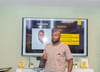
In this episode, Adrian sits down with the incredible Dawn Dickson who has been building companies for 23 years; A 6-time founder, entrepreneur, speaker and real estate investor, sharing her journey and passion for building bridges between the diaspora and Africa, particularly Ghana.
We discussed:
- The booming real estate market in Accra
- The cultural renaissance, and the business opportunities awaiting in Ghana
- Dawn's insights on investing, navigating the real estate landscape, and creating a bi-continental lifestyle
- Dawn's very successful Smart Vending Machine company, Popcom
Sponsors
Season 6 Sponsors: Workspace Global (connects you to remote creative teams that offer a variety of design, digital and development services to help you build and grow your brand.). Get your FREE 7 day trial here.
Follow Dawn Dickson
Instagram: https://www.instagram.com/dawnwdickson/
Linkedin: https://www.linkedin.com/today/author/dawndickson
Website: https://dawndickson.me/
Our partners
Start a profitable business with Skool: https://thesoundofaccra.com/skool
Free Podcast course: https://skl.sh/2TRY0fN
Start or uplevel a podcast: https://www.atozpodcasting.com
Fresh Bread, Catering and Food Processing in Accra: https://ebatfoods.com/
Ghana's First Super App: https://shaqexpress.com/
Rent anything in the UK: https://fatllama.com/r/adri-6451b
Today's episode show notes
https://thesoundofaccra.com/dawndickson
Timestamps / Topics
00:00 Intro
04:38 Dawns passion for Africa
07:27 Lagos always present, chose Ghana for connections.
10:15 Popcom: Innovative vending machine integrates digital technology.
14:31 US citizen residing in Ghana, seeking dual life.
16:31 Choosing expertise over location for professional focus.
21:59 Helping others invest and avoid scams.
23:41 Ghanaians own land
27:46 Outro
Watch season 6 episode 6 with Andrews Asare:
https://youtu.be/Mgl1llxTW98?si=fAjHGS7qb9pLLBXd
Catch up with Season 5 here: https://www.youtube.com/watch?v=NnqpgGxTAXg&list=PLJUVirAfWnNoGiJNHHWm6aYTUUberuD5V
Listen to the podcast on other platforms
https://linktr.ee/thesoundofaccrapod
Social Media and Website
YouTube: https://youtube.com/thesoundofaccrapodcast
Website: https://thesoundofaccra.com
Instagram: https://www.instagram.com/thesoundofaccra/
TikTok: https://www.tiktok.com/@thesoundofaccra
Twitter: https://twitter.com/thesoundofaccra
Facebook: https://web.facebook.com/thesoundofaccra
Linkedin: https://gh.linkedin.com/company/the-sound-of-accra
Support the show
https://www.paypal.me/gofundad
Get in Touch
Website: https://www.thesoundofaccra.com
Contact: https://thesoundofaccra.com/contact
Email: info[at]thesoundofaccra.com
About The Sound of Accra Podcast
Our mission is always the same, to promote Global Ghanaian excellence. And always to bring you closer to Accra, whenever you are, with powerful stories that make you want to take action in your career, business or personal life.
For almost 5 years, we have been championing global Ghanaian founders, entrepreneurship and Creators through podcasting. We've achieved 10s of thousands of audio downloads worldwide and published well over 150 episodes to date.
It's our mission to grow and establish global audience, and become a go-to resource for learning about native and diasporan Ghanaian Creators, Entrepreneurs and Founders worldwide.
I'm kindly asking for your help. Yes, all of you. To leave a review on Apple Podcasts and Spotify, the most popular podcast platforms that you all listen to us on
Mentioned in this episode:
Try WorkSpace Global Today
Workspace Global are the official sponsors of Season 6 of The Sound of Accra Podcast. Workspace Global connects you to remote creative teams that offer a variety of design, digital and development services to help you build and grow your brand.
[00:00:00] Hey there everyone, I got by the name of Adrian Daniels. Welcome to the Sound of Accra Podcast. This is the show where we speak of top founders, entrepreneurs and creators worldwide from a garnering background or interest with the aim of leaving behind a meaningful takeaway that you
[00:00:13] can apply in your life, business and career. Just some housekeeping for today's episodes, I'd like you to head over to thesoundofaccra.com for slash Dawn Dickson, thesoundofaccra.com for slash Dawn Dickson for all of today's show notes, nuggets, keywords and points, links and references.
[00:00:30] If you're watching YouTube, please let us know what you think in the comment section, hit the like button, subscribe. If you're listening on Spotify and Apple Podcast, a five star review is very much appreciated. I'm going to introduce today's guest. We have
[00:00:41] Dawn Dickson joined on the Sound of Accra Podcast. Thank you for coming on the show. Thank you for having me. Likewise. Dawn is a six-time founder, author, speaker and recently she's also gotten to real estate. We're going to talk about that as well.
[00:00:56] Dawn, thank you for coming on the show. I was really excited while I was listening because Social Proof is one of my favorite podcasts. I listened to it in the UK. We're also watching Donnie Wiggins' Four Transparency Podcast. When you get into Ghana, I was quite excited.
[00:01:12] She's achieved quite a lot and she's come into Ghana. I was quite excited to see what you're going to get up to in Africa. Could you tell us a little bit for those people that don't know you?
[00:01:23] I mean, you've been featured in quite so many places, CNN, Forbes, Kebnu Larry, HubSpot. You did a series of HubSpot. Could you tell us a little bit about yourself and who you are? Yeah, of course. Thank you again for having me. It's always
[00:01:37] just an honor to share my journey and I hope that your audience is meeting someone new. I've been an entrepreneur for 23 years, so they will call me a serial entrepreneur. I started six
[00:01:48] companies, exited one and the process of exiting another and the process of expanding one to Ghana. My background is technology. I went to school for IT a long time ago, 2000. It was coding and
[00:02:03] building websites and building tech for most of my life, whether it's tech face directly tech or tech-enabled businesses like e-commerce. I have also e-commerce company for 12 years. Yeah, that's what I do. I also am a speaker. I speak all around the world and I recently was
[00:02:22] invited to join the US Speaker Program through the State Department of the United States. That's exciting. I'll be traveling around the world talking about entrepreneurship and just really getting to share my journey more. Now, I consider myself a retired tech CEO of my mission personally
[00:02:37] to be a bridge between the DASPERA and Africa. I feel like Ghana is the best landing and launch for expansion into Africa. That's why I'm here. Amazing. I think I heard in one of the podcasts
[00:02:51] that it was always your goal to come to Africa or maybe even the homes. I always knew my whole life. Even as a young child, I felt connection to Africa. But of course, Africa is a continent.
[00:03:03] I had to figure out what country, what I go to, what aligns with my lifestyle, my goals and my career accessibility because I do have my family in the States. Can I visit them? I don't want
[00:03:13] to be too far. All those things were factors and I started to just travel around Africa to feel it out. I traveled to several countries before coming to Ghana in 2019 for the year of the return.
[00:03:27] I felt very welcome. The administration did a great job of getting the word out to us in America that Ghana is welcoming us. I definitely felt really at home and I had never felt
[00:03:42] at home in Africa until I came to Ghana. Wow. You were here during the year of return period? I came for the year of the return because I didn't know where to go. Like I said,
[00:03:53] Africa is a continent. There are so many countries to go to. But I said, who wants me there? I don't want to come force my way into a country or go to a country where there's nothing in place to
[00:04:03] really help us to integrate and assimilate. I don't want to just wing it. I'm by myself, I'm an empty nester, my daughter is almost 20. I'm alone. Where can I come alone and
[00:04:17] be able to make it? When they announced the year of the return and the mission to connect the aspirants to Ghana based on our roots, I said, okay, let me go see what Ghana has to offer because
[00:04:28] obviously they want me there. They're welcoming my people, black Americans there. They did a great job. The year of return period was such a phenomenal period. Everyone from Boris Kudjernay and Michael Campbell, Edwis Elba, Anthony, there's so many people that came down.
[00:04:46] Just to see maybe hundreds of thousands, even millions of tourists driving and also more importantly African Americans come home. It was just a phenomenal thing that took place as well. What stood out to you the most when you came down to Ghana? What was the
[00:05:07] things that stood out to you the most? I know you mentioned friendliness and the warmness. What other areas of what other things about Ghana really stood out to you and really kind
[00:05:17] of appealed to you? That makes me look like I was living in. I mean, the people definitely are really amazing and that stands out. The warm welcome just, and I was like, wow, they look like black people in America. I mean, obviously I'm not ignorant to
[00:05:32] the diversity of Africa and its people, but it just felt very much like if we wouldn't have opened our mouths, we could have been in any American city as far as the way that we look or attire. But
[00:05:43] the face, black Americans look like West Africans in many cases. I felt like, oh, I know somebody that looks like this guy. Kofi looks like Jerome. That's stood out just the people. And I mean, of course, the weather, I lived in Miami, so I love warm weather.
[00:06:02] So the weather was a big thing on my lifestyle chart. So it's just beautiful weather. The food is delicious. So any kind of food you want to get, you can find it. I'm plant-based. So many
[00:06:13] countries I have challenges eating and finding food, but I didn't have any problems finding food here. And I love fresh vegetables and fruit, so it's abundant. So that was a thing. And then
[00:06:25] I like that Ghana is, it's a small big city. You get enough, there's enough to do, there's enough traffic, please no more. But it's not like Legos. But what's like, you know, I spent a lot of time in Nigeria and I did enjoy many elements of Nigeria,
[00:06:43] but Ghana is just like a more calm, safer, cleaner, chill Nigeria. Yeah. I like to call Legos Ghana in our alternative universe because when you get there, it's just different. It's just so different. Yes. But the things that I liked about Legos are
[00:07:04] still here. But the things that I didn't like about Legos, I don't have to worry about. I mean, as far as crime, I have no concerns of my personal safety as a woman. And then congestion,
[00:07:14] as I said, I don't want to spend my days in traffic. You know, if you live in Ghana and you time your days right, you can't avoid much of the traffic. You know, if you fit, no wind to move.
[00:07:27] Legos, you're not avoiding it. At any time of day, it's there. So, you know, I just, when I thought about what country between, maybe between Nigeria and Ghana, Ghana just really, really stood out. And then my network, I, there's a very large population of Ghanians in the US
[00:07:43] and I've met many. And so when I said I'm going to come to Ghana, they just made some connections for me that really helped open doors for me, my American friends. And it was very easy to
[00:07:56] tap in to the network here in Ghana and really start to establish myself. Yeah. I mean, Ghana, it's, I mean, it's a small world. I mean, it's not particularly huge. You know, especially your Clarice, it's not particularly huge city. So I think
[00:08:09] once you get to know a few people who maybe movies and shakers, that can kind of lead to mean some of a key contacts within the city. So I'm kind of not too surprised.
[00:08:19] It's quite interesting that you mentioned all of this. I think with Legos, it's quite crazy because the population of Lagos is like the population of Ghana. The whole country. The population of one city is the whole country. Yes. Yes. That's perspective
[00:08:31] for sure. Yeah. But in terms of traffic in Ghana, especially during like the year returned or even beyond the return, I mean, that's something that the country doesn't need to work on. Just December in general is just crazy.
[00:08:41] Yeah. I mean, entrepreneurs solve problems and of course you're quite an accomplished entrepreneur. I mean, are there any, I mean, this is off the cuff question here. Are there any kind of problems apart from traffic that you see Ghana could need solving?
[00:08:53] Oh, all the problems Ghana has comes down to your politicians. So we all know this. We're not going to go into a political conversation, but no, no, no, no. Infrastructure is something that I believe countries should double down on.
[00:09:06] Ghana especially in technology. So there's tons of opportunities in infrastructure and technology if those who control the money and the decisions and the contracts would be open to people outside of their immediate network. That's a PC way to put it. Yeah. That's a good point right there.
[00:09:28] Okay, I'm doing, I want to double tap on a couple of things that you mentioned and then we can go into like Africa and real estate and see what we're doing. Yeah. I'm open. Whatever we talk about.
[00:09:36] Of course he mentions, you know, how long you've been in technology and software and things like that. Popcorn, can I quickly talk a little bit about that? Popcorn. Popcorn. Sorry, popcorn. Popcorn. Popcorn. I know it sounds similar. Do people kind of make that?
[00:09:51] They do, but then I explain it's Popcorn, which is like pop up in commerce. So it's, you know, automated retail. So it just, Popcorn, pop up commerce. Yeah. And really it's sort of smart vending machine, isn't it? Yes.
[00:10:03] Could you tell us just a quick little bit about that? Yeah. So I developed software to automate, make vending machine smarter. You know, I definitely always look at ways to make direct to customer distribution faster and more efficient. And now we're in the world of digital payments, accessibility.
[00:10:18] And then we were in a world of COVID when at a time people didn't want to be around each other or touch things other people touched or, you know, you couldn't get things you needed. So I really was trying to solve problems for this post COVID world.
[00:10:30] Prior to COVID, I was just really trying to keep up with e-commerce and bring the e-commerce experience to brick and mortar retail. So I developed a vending machine that leverages robotics, facial recognition and artificial intelligence to collect customer data, count traffic,
[00:10:46] deliver a product on demand and have that really that's customer journey very similar to what they're used to in the e-commerce environment. So I built that business for 10 years and it's definitely, I have a patent. So I invented a vending machine. I was definitely leveraging face recognition
[00:11:04] and AI before it was a buzzword and topic. So I definitely was a little bit too early before consumers were ready to join. And so now, you know, once the AI, everybody's AI,
[00:11:15] this AI, that AI, this AI, that, but I was doing it so long ago. Sometimes I feel like maybe I was too early, but that's what we do. We're in the process of selling the company.
[00:11:27] My time as CEO and fundraising and in the trenches of the American venture capital system have expired. And so now I'm just excited about where I'm at in life now, which is an investor
[00:11:40] and advisor. And then of course, I'm now in real estate, which again goes along with my purpose of being a bridge for the diaspora to return to the continent. Yeah. And speaking of Africa, I mean, you did mention, I think you've also kind of lived in
[00:11:54] Miranda bit. So how would you compare? Okay, so yeah, you have bi residency. I go back. So I call myself bicoastal and bi-continental. I love that. I'm bicoastal in Africa between Rwanda and Ghana and I'm bicoastal between Africa and the United
[00:12:06] States. Yeah. I haven't been to Rwanda but I've heard it's a beautiful place and I've heard they're very strict to things like plastic and things like that. Oh yeah, you can't bring plastic into that country. They will stop you in the airport. The
[00:12:16] first time I didn't realize what I had done, I bought something in the airport and I was carrying it into a plastic bag. So I bought something in this airport in Accra and I was carrying it to Ghana,
[00:12:27] I mean to Rwanda and I'm walking off the plane, going to leave the airport and they're yelling at me. I'm carrying a plastic bag and they're yelling at me, no, no, stop, stop. And I'm
[00:12:37] like, what are you talking about? Like what's going on? And they're like, you're not allowed to have that, you're not allowed to have plastic in this country. I respect it. It's clean. It's
[00:12:47] clean. It's so clean. I mean that's the thing that stands out the most is no litter, no trash. Every month the entire country must do community service together and they must all get together and clean and do community service as a country. There's no homelessness
[00:13:01] and no unemployment. Everyone is employed, everyone has food, everyone has insurance. So they've done a great job of doing that. So people will say things like it's a dictatorship. Well, they're doing a damn good job of taking care of their people.
[00:13:14] Yeah, it looks like in Rwanda, Kigali, whatever, there's like a level playing field. Yeah and it's not just Kigali, it's the whole, I've been all over Rwanda. You can go out into the village areas and it's still clean. Everybody has water, everybody has access to
[00:13:27] things they need. It's still the pride they have for their land. But you have to remember they went through some extreme trauma and they went through extreme with the genocide. Every single person there was impacted, every single person because over a million people were killed.
[00:13:41] So every person I meet has a relative or someone that they lost. So it makes you, when you have tragedy like that and the country has to come together to rebuild your country, you know, that hits a little bit different. Ghana has been comfortable.
[00:13:57] Yeah, I must say. I do agree with that for sure. I definitely agree with that. Wow. On a double tap, you mentioned your bi-continental, bi-coastal woman. I know you got some stuff coming up in terms of 2024. You got the bi-continental event.
[00:14:15] Yes, I have a host. I don't even want to call it a retreat. I don't know. It's like a trip, you know, for no more than 10 people and it's really targeting people that want to live
[00:14:24] a bi-continental lifestyle. So people that want to be like myself. You still have, you're a resident of another country. I'm a resident of the United States. I'm a citizen of the US.
[00:14:33] And I have a life in businesses in the US, but I live in Ghana and I want to go back and forth and I want to figure out how can I, well, I've done it, you know? So have two lives,
[00:14:41] have established myself in Ghana and in Africa and establish myself in states established in the United States. Who do I need to know? What do I need to do to be doing business
[00:14:52] and investing and living in Ghana? And so a lot of people come here on a tourism trip. You're going to see things, but it's really more about the network. So I introduced them to
[00:15:02] key people that they need to know to actually thrive in Ghana. Show them the places that we eat, that we shop. I mean, when you're a tourist and I experienced this myself firsthand,
[00:15:11] I came to Ghana in December twice and I was like, oh, it's so fun. Oh, this is so great. And then when you live here, it's very different than when you're a tourist. I mean, you do business as well.
[00:15:20] Everything is very different. You're not doing the same things. You're actually, you have to eat every day at the grocery shop. You have to, you know, the mobile phone provider, doctors, you have to get your hair done or nails or barber or all these things you need.
[00:15:32] And so I really like to show them the way on how can you really function here? That's great. I mean, I know there's a lot of, because I'm from a base of London at the moment,
[00:15:44] and there's a lot of British, you know, Guardians that kind of live between both countries, but it seems like now I'm starting to see a lot more, you know, Americans, you know,
[00:15:53] have kind of a lip between Africa and America. Because we have to get out of there. It's going crazy over there. But, you know, I host my event in May, taking 10 people in October. And I did
[00:16:05] it last year and I had eight people and it was just phenomenal, very intimate, really just getting to know Ghana in a way that I wish I would have known. It would have made my transition
[00:16:17] a lot easier if I had someone like me. Someone like you, yeah. So now you can pass on the blueprint to other people as well. Is that something you do? Each one teach one, you know? Each one teach
[00:16:26] one, yeah. I love that. Yeah. But is that something you do for African countries or just Ghana? Just Ghana because I live here and I mean, even though I live in Rwanda and I have
[00:16:34] a very great network, I just, I'm here, I'm in Ghana, like I work here full time. I have land here. I'm really here. And so I just focus on like, I think people should focus on what
[00:16:44] they have expertise in and what they really know well and not wing it, you know? So I just focus here right now. I agree because it comes across authentic when you don't wing it as well. How
[00:16:54] do you compare both countries? I know you mentioned, you know, like how, you know, that there's a lot, this is a lot more cleaner. Everyone seems to have the artistic clean water and the things like that. How do you compare the two countries?
[00:17:04] I mean, you know, I will say there is no comparison. There's nothing alike. The people are different. The food is different. The culture is different. The lifestyle is different. The way the country has ran is very different. The government structure, the corruption level.
[00:17:19] But I love Ghana still because I love the people, you know, I love the people in Rwanda but what I've found is there are a lot more, you know, to themselves. You know, Ghana just,
[00:17:33] they're very friendly, outspoken, you know? I'll be in Rwanda and nobody come up to me like, hi, how are you? Or just come and talk to me. That's not really their culture. You have
[00:17:41] to get to know them through their, through time. But Ghana, they'll just come to you, you know? And they'll just welcome you and they'll be very conversational and want to be helpful. I mean, yeah, they want a few CDs for that help.
[00:17:54] Of course. They want a few CDs for that help. That's not creepy on the windscreen, yeah. But they're still helping, you know? Even things like, oh, madam, your purse is open. Close your bag or you have, you know, this is hanging out your car. Like just,
[00:18:05] just caring about others. And then the entertainment, I will say, I'm a single woman. You know, I'm empty-nestor. I want to have fun. I like to go, have options to go out. It's not so many entertainment options. It's more mellow. I'd say like Rwanda is a
[00:18:21] place for, if you're in a couple or a family, it's a really great place to raise a family. It's so quiet and calm and clean. But if you want to turn up like, it's not the place.
[00:18:31] It's not. I'm getting so bored. I love it. I'm like, oh, it's so beautiful. It's so beautiful. But damn, I'm bored. So Ghana has a bit more off the, not so much. Oh, Ghana every night of the week, every day, it's an event going on. Every evening, there's
[00:18:44] something to do. There's just so many restaurants, so many emerging new lounges. I always tell my friends, Ghana, across specifically, because Ghana is a country and we have to keep in mind,
[00:18:56] a crowd does not represent Ghana. Ghana has so much more to offer. But a crowd, the city, it reminds me of Atlanta, Georgia in the early 2000s. And I lived there at that time. And it was
[00:19:07] the renaissance and the boom of ATL. And it was a time for culture to take the global stage. And as you see, Ghana, across Ghana has taken a global stage as far as travel tourism, music,
[00:19:20] events. And so that's how it was for Atlanta. So anyone who is Black in America will understand what I mean when I say this is like Atlanta in the early 2000s. Oh, I'm sure I can appreciate that. I've never been to Atlanta, but I can definitely
[00:19:34] appreciate what you're coming from because I think there's like a vibrancy. Oh, yes. And like the entertainment mecca and it's just the boom of everybody coming there, moving there. So many people were just started to move to Atlanta in that era.
[00:19:46] And I see it happening now with many people moving to a crowd and being bi-continental. Yeah. I think post COVID era, dawn, I think we've seen a lot of migrant, like a lot of migration taking place, not just continental, but intercontinental as well.
[00:20:05] Yeah. Because I think Ghana is doing a really good job of marketing itself as a place. I think that they have work to do to once you get us here. You market us, come, come,
[00:20:19] come, come, come, spend your money, chop, chop, chop. And then when we live here and we get here, okay. Now what? How can we have a lasting impact? It's true. Yeah. Because I think the constant thing here is that though, like you'll come here,
[00:20:31] maybe during the, the, beyond the return period, the death, he does, and the way we record it. And then people will come here, they'll turn up to do what he needs to do. And one thing is the journey for everybody is like, okay, what's not working now?
[00:20:41] Yeah, then what? So I think I guess one step maybe tourism needs to take is what happens after that. Yeah. That's what I thought beyond returnments. But I think that's a tourism initiative.
[00:20:52] So it's just like, I'm hoping that the Office of the Aspirin Affairs and under the Office of the President will step that up and really start to engage with the people that have actually made Ghana home. And not just in a crowd. They're all around. They're in,
[00:21:06] they're on the Volta. They're in Cape Codes. They're in, they're Kamasi. We're around. So what, you know, how are we helping to mobilize this community of brains, resources and money? What are you going to do? How are you going to use us? We're here.
[00:21:23] We have a lot to offer. True, yeah. And I'm sure of course, Ghana can use your skills as well. They're using mine now. DevTaco was smart. Oh, so did it come after you? No, it went after them. Okay. It went after them. Why did you pick real estate?
[00:21:36] I picked real estate because two reasons. I have a tech background. I came for technology. And then the United States technology is a way to grow wealth. One of the ways, and it's a really way that they
[00:21:48] really put out there, but Ghana technology is not, you know, people are not investing in technology the way they should. What people are investing in is real estate bonds, things like that. And then also to be that bridge, you know, because a lot of when people started seeing
[00:22:03] my journey, I'm very well known in my country. When people started seeing my journey on social media, they were like, wow, I want to do this too. Can you help me? And yes, I guess it was the
[00:22:14] real estate called me because people were asking me to help and can I vet things for them and can I check things out for them? And I felt like that'd be a good opportunity to help people to invest and not get scammed. You know, scams exist everywhere.
[00:22:28] And if you do your due diligence and have the right people on the ground, you can prevent it. Yeah. Blindly purchasing something, we do that too much. And so I that's what made me really get into
[00:22:39] real estate and business is business. I'm a business woman. I go after opportunities and I enjoy the real estate business. I enjoy the development, you know, business. I have a lot to offer. I have a large community of diasporas around the world that engage with
[00:22:53] me that are looking to invest and I need somewhere safe to park them and for them to put their money that I know it's going to be managed properly, that I know they're not going
[00:23:00] to give you their money and they never see apartment because I could not face these people. If I sold something, got my commission and walked away and they didn't get their apartment. We're not doing that. Of course.
[00:23:12] So that's why I had to go somewhere that I could stay and help be a part of the growth of this company. Because everything you've built up in the past is all transferable, is it, to what you're doing right now? Yeah, everything. Negotiation, relationship building, service, customer service.
[00:23:28] Market to. Yeah, all of that. Clever, clever. Clever, yeah. As much as real estate is probably a safe way to invest. So of course we've talked about there are pit holes where people will go and buy land. Yeah, it's big. It happens every day.
[00:23:43] And even buying into developments because across very land rich, almost every guy man owns land and that's a beautiful thing. And now they're starting to build on that land and sell it. Which is also beautiful to see the Garnayans being able to tap into the wealth
[00:23:59] that's coming from outside the country. But what concerns me is people being developers who have no experience being a developer. Building a house is different than being a developer. Yeah, of course. It's very different. Because being a developer is more like building a scale, isn't it?
[00:24:16] Infrastructure, maintenance, management and that skill. That's a developer. Okay, so those four pillars. That's how what I considered as a business person. A developer is looking at how can we build this up, this area and not just put a house on the land
[00:24:31] but develop that area, develop that community. And then once it's built, not just given the keys and walking away, how are we going to maintain that property and manage it so that the return on investment is seen? Are you going to keep it nice, neat, painted?
[00:24:49] Are you going to keep the grounds nice? Are you going to keep everything? Because it looks good when everything is nice, brand new. Yeah. Everything. When you're speaking to clients or customers, do you present this turnkey solution?
[00:25:01] Not only are you going to get a solid product but also we can advise you on how you can make the returns, how things can be kept safe. Wonderful. I find it so interesting. You've
[00:25:13] set up six plus businesses and it's like you've gone from the dream usually to go from job to entrepreneurship but you're going away. Oh, I love every minute of it. I love not being in charge.
[00:25:25] I love that they're not bringing it to me about payroll. I don't have to worry about paying the rent. I just can focus on what I love which is really marketing, business
[00:25:34] development, building relationships. I am so happy in my role. I do not want to be CEO of shit. So while I'm selling my company, I'm the founder but it feels good. But again, it was 23 years of being a CEO, 23. I guess it can be taxed into a extent.
[00:25:55] Oh, it is. Beautiful. I mean you've gone from entrepreneurship to entrepreneur. I'm absolutely and they give me the freedom to be creative and come up with things and still have the ability to make decisions. So I do feel very much like an entrepreneur in that
[00:26:12] organization. Beautiful, John. I've really enjoyed this conversation, John. There are people that still work jobs in Ghana but then there's also people who want to become entrepreneurs. You've definitely done your fair share of that. What tips would you give to
[00:26:26] because there's a startup scene in the street in Ghana? Oh, it's here. I'm very involved with it as well. I actually invested in a local startup here called Jardigo. I've definitely believed in them. Jardigo is sustainability and software
[00:26:38] logistics so they work with local businesses to put their food in jars. If you eat in Ghana, what you eat, plastic, styrofoam and what happens to that plastic and styrofoam? It's on the ground.
[00:26:50] It's in a big landfill somewhere. It's not doing well for us. So the sustainability is really important. How can we reduce waste? How can we keep food safe? How can we store it over
[00:27:01] days? So they put the food in jars. It's pressurized. The food lasts three days. It's easy to distribute. And me coming from a retail automation background, I totally understood their angle with that because
[00:27:10] they could eventually put the food in vending machines and that's what they're doing in cases now. So I invested in that and I'm very... I love that company and I want to see them grow.
[00:27:19] And then I do go to the meetups and advise and be in the groups because I'm an entrepreneur at heart. Of course. I'm here to support. So it is a great ecosystem. I'm sure that's something that you can never get out of.
[00:27:29] They need more money. They need more investors to invest in the amazing startup companies that exist in Ghana. So I need people who are listening to come invest in some Ghana startups. Absolutely. We're going to get to the announcements. What tips would you give
[00:27:43] for those that want to become entrepreneurs? Research the market. You know, truly deeply understand what you're building, what business you're starting and who's going to buy your product or service. Who else is doing it? What's the competitive landscape?
[00:27:59] What is the market opportunity as far as money? We're not in entrepreneurship to just have a hobby. We're in it to make money. What is your earning potential? What are your margins? People jump into business when I've been understanding the cost of doing business.
[00:28:13] Sometimes you get into a business and it sounds like you're making money. When you do the numbers, you're making none. You're losing. And so it's so important entrepreneurs to know your numbers and understand the business you're in and how that business will scale.
[00:28:26] And understand the money that you need to grow this business to where you want to take it. Before you even go out selling something or asking for an investor, really deeply, deeply study your market and understand we are going with this business.
[00:28:42] What is your end game? Yeah, I think that's the most right thing to do because if you don't have an end game, then you don't have a blueprint to where you want to go. It's doing fantastic advice. I'm really, really enjoyed having you in the show.
[00:28:57] Are there any announcements that you want to make to our audience? Yes, you can find me on social media, Don Dixon, D-I-C-K-S-O-N. I'm sure they'll share my links and things too when I'm working on them but I would love to hear from you in general.
[00:29:12] I just use me as a resource to find trusted, incredible investments in real estate in Ghana. Beautiful. Great. And I think you shared your social media already so I can share it with you. Yes and also dondixon.me is all of my things. So Don, D-A-W-N, D-I-C-K-S-O-N. M-E.
[00:29:33] Don, thank you. It's been a pleasure having you show. Thank you so much. So there you have it guys. You're welcome, very much welcome. So there you have it guys. The beautiful, wonderful, talented Don Dixon.
[00:29:43] We'll have all of the links in the show notes from today's episode. You can head over to www.thesanamacryl.com for Don Dixon. That's D-A-W-N, D-I-C-K-S-O-N. Check the podcast, YouTube description if you're listening or watching the podcast. We'll have Don's socials
[00:29:59] in there as well and of course you'll learn how you can work in terms of real estate investment in Ghana. And yeah, other than that there you have it guys. Thanks for tuning in.
[00:30:10] Please let us know what you think of today's episode. Leave us comments in terms of what we've discussed today. Maybe if you're looking to invest in real estate maybe there's something me and Don could do in the future. Maybe you could lie back a webinar or something
[00:30:21] and we can cross-pollinate audiences and things like that. So yeah, check all the links in the description and the show notes and we'll see you in the next episode. Thank you.